Noelle (WP5) – Designing a transition towards circular economy of water: Examining practicioners’ understandings in the Netherlands
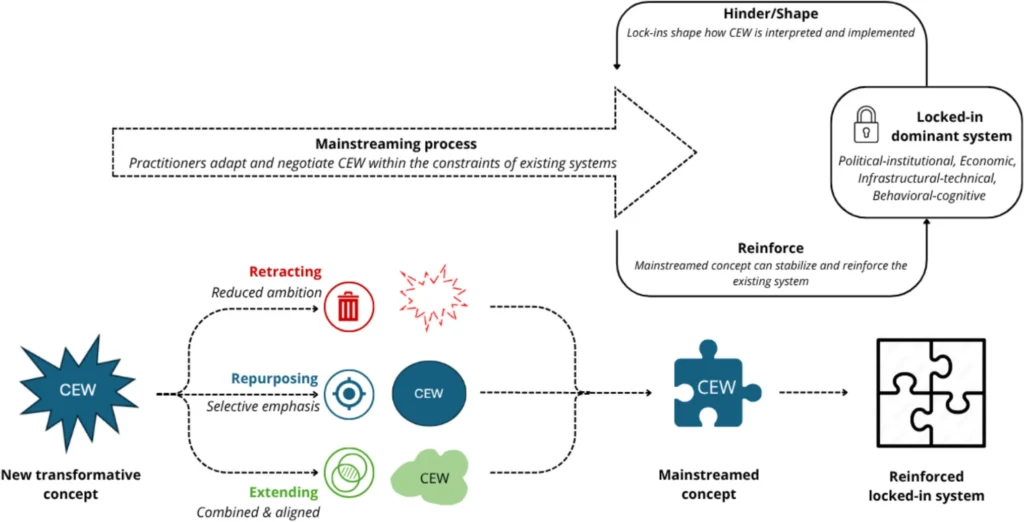
This paper examines how new policy concepts are taken up in practice, focusing on the Circular Economy of Water (CEW) in the Netherlands. Drawing on 20 semi-structured interviews with practitioners from different governance levels, regions, and sectors, we analyze how CEW is interpreted, reshaped, and mainstreamed into existing water-governance structures. We identify six lock-ins that […]
Jill (WP4) – Coupling ORCHESTRA with HYDRUS to simulate multicomponent reactive transport in variably saturated porous media
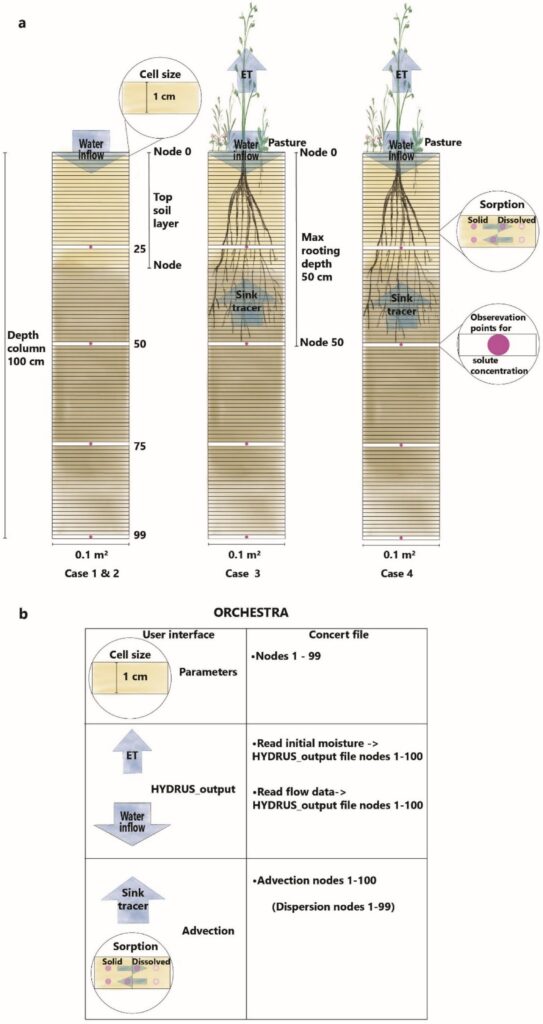
We develop and demonstrate the coupling of the variably saturated flow and transport model HYDRUS-1D, with the geochemical reaction model ORCHESTRA, for simulating multicomponent reactive transport in soils and other porous media. We implement a loose coupling of HYDRUS and ORCHESTRA that feeds flow information simulated by HYDRUS into ORCHESTRA, where arbitrary multicomponent reactions, transformations, […]
Alaaeldin (WP4) – Effect of solution pH on phosphate transport in anion-exchange membranes: anion mobility and equilibria
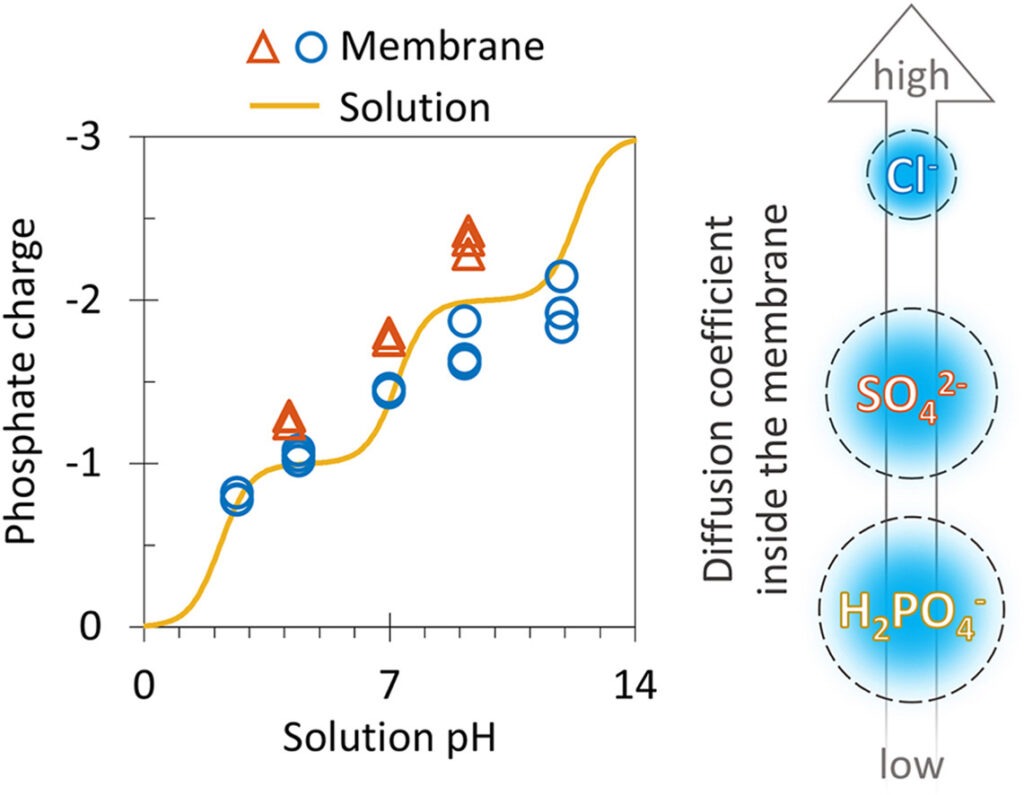
Phosphate recovery from wastewaters is a key strategy to overcome the limited accessibility to phosphate fertilizers. Understanding the phosphate transport across anion-exchange membranes (AEMs) is a crucial aspect to optimize the operation of electrochemical technologies, e.g., electrodialysis, to recover phosphates. The phosphate transport is influenced by the amphoteric nature of phosphates, i.e., the ability to […]
Ignacio (WP2) – Effects of temporal resolution on modelled regional groundwater salinity and salt fluxes to surface water
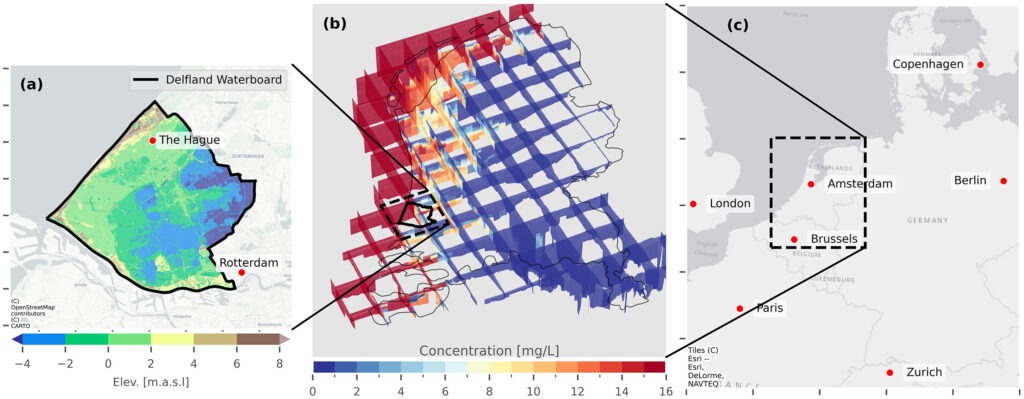
Coastal freshwater systems face growing threats from climate change and intensified withdrawals, with groundwater and surface water salinization as critical impacts. Variable-density groundwater flow and salt transport (VD-GWT) models are essential tools to understand these processes and thereby predict the impacts of, among others, climate change induced sea-level rise, precipitation changes, and water management strategies. […]
Kirsty (WP5) – Enabling a circular water transition: Identifying governance pathways for wastewater reuse

Over 80% of the world’s wastewater is discharged untreated, making reuse a widely underutilised strategy for addressing water scarcity. Due to the complexity of implementing water reuse systems, supportive governance conditions are required to steer this process and overcome barriers. Insights from water governance and sustainability transitions literature suggest that configurations of governance-related conditions, such […]
Flavia (WP5) – Unravelling the interplay between collaborative governance and experimentation for transformative potential in circular water systems: A Dutch case study
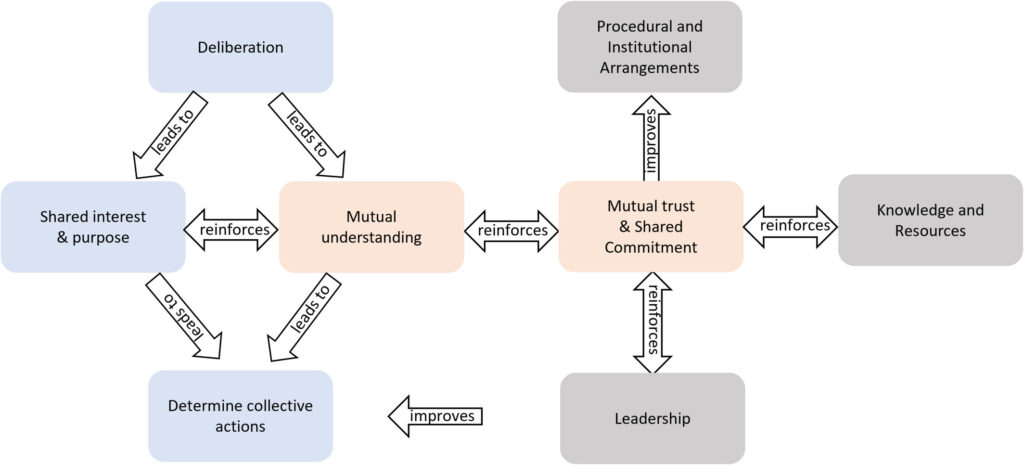
Freshwater availability is a critical climate change challenge in coastal delta regions. This challenge requires a transformative change toward circular water management. While experimentation and collaborative governance are recognized as enablers of transformative change, their interaction remains complex and insufficiently understood. Experimentation offers flexibility and learning processes with innovative solutions, whereas collaborative governance is based […]
Sophie (WP5) – Risk governance in EU wastewater reuse law
Increasing water scarcity forced the European Union to investigate the possibility of supplementing natural water sources with reclaimed wastewater. Regulation (EU) 2020/741 sets minimum requirements for the safe reuse of treated urban wastewater in agricultural irrigation. The risks that wastewater reuse presents are further regulated in the numerous EU law instruments that concern the protection […]
Tjerk (WP4) – Nanoparticles as sacrificial pore fillers for the fabrication of high-permeability polyelectrolyte multilayer membranes
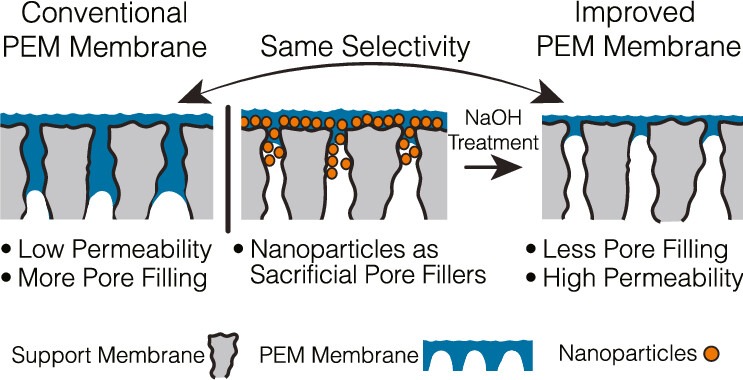
Polyelectrolyte multilayer (PEM) membranes have shown great promise in a wide range of membrane-based separations. However, a continuous challenge is the permeability-selectivity trade-off. One method of avoiding this trade-off is by reducing the thickness of the selective layer. However, PEM membranes have a limit to this reduction, as they first have to fill the pores […]
Alessia (WP3) – Uncovering redox-specific biotransformation of organic micropollutants
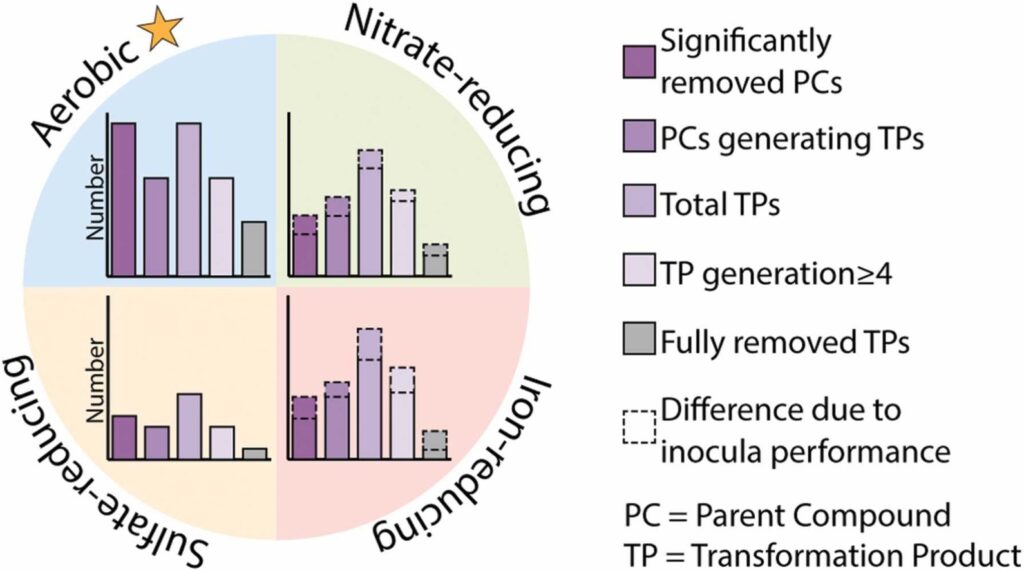
Redox conditions are key environmental factors influencing organic micropollutants (OMPs) biodegradation in both nature-based and engineered treatment systems. Yet, OMP biodegradation and transformation product (TP) formation under different redox conditions are not fully understood, particularly using natural inocula. Here, we tested two natural inocula, from soil and ditch sediment, for biodegradation of 19 OMPs under […]
Valdrich (WP6) – Predicting groundwater storage from seasonal managed aquifer recharge: insights from machine learning and explainable AI techniques
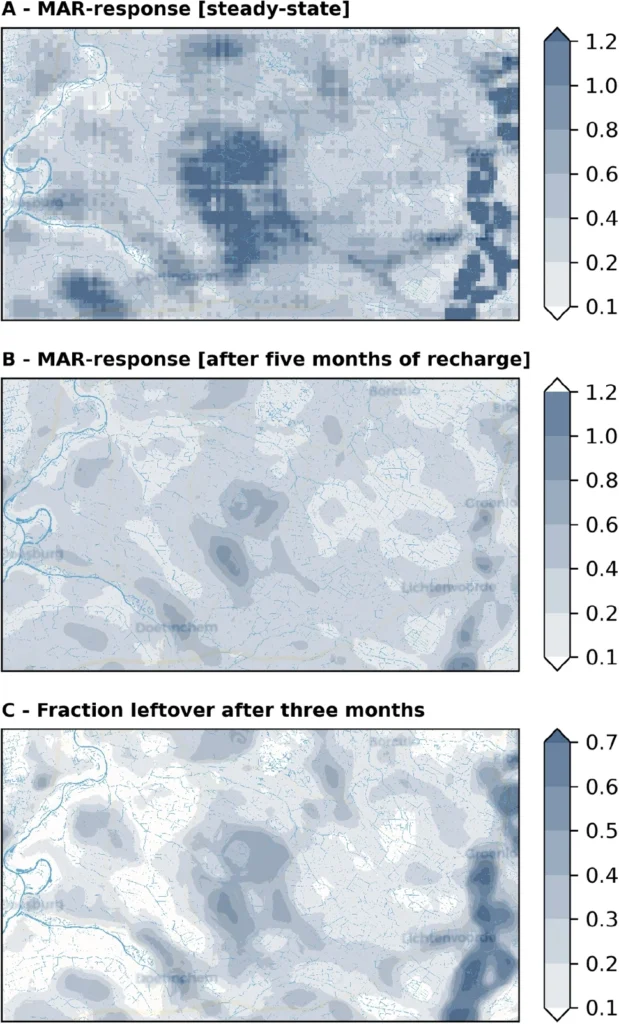
Managed Aquifer Recharge (MAR) is widely used to enhance groundwater storage and support sustainable water use. To support site selection and planning, Machine Learning (ML) models are increasingly used as computationally efficient surrogates for traditional numerical models. While ML has shown promise for steady-state simulations, capturing transient responses remains a challenge, yet these are essential […]