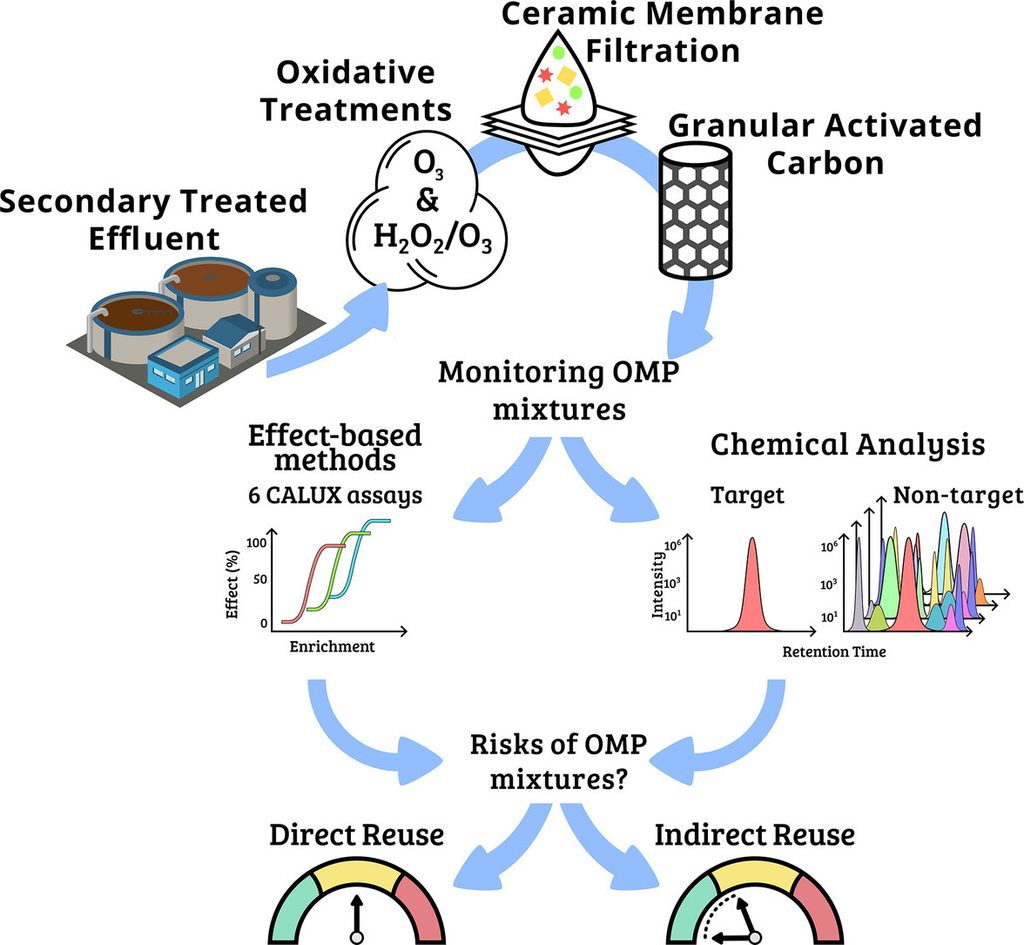
The multitude of organic micropollutants (OMPs) in treated wastewater (TWW) represents a significant challenge for water reuse. This study aimed to evaluate water quality using a combination of target analysis, effect-based methods (EBMs), and non-target screening (NTS) to demonstrate the benefits of a comprehensive chemical risk assessment of TWW and to assess its reuse potential. OMPs were analysed in a pilot plant treating municipal wastewater, using a combination of ozonation, advanced oxidation with hydrogen peroxide, ceramic membrane filtration, and granular activated carbon. Target analysis showed that the treatment effectively removed OMPs, but negative removal was observed for individual compounds after activated carbon, likely due to desorption. After activated carbon, caffeine, carbamazepine, diuron, fipronil, imidacloprid, linuron, MCPA, O-desmethylvenlafaxine, sulfamethoxazole, and venlafaxine had risk quotients >0.1, with fipronil consistently exceeding 1 and MCPA exceeding its drinking water guideline value. In vitro EBMs, covering oxidative stress, xenobiotic metabolism, cytotoxicity, estrogenicity, and thyroid disruption, detected effects in secondary TWW. EBMs revealed the ceramic membrane treatment’s ability to remove oxidative stress.
Based on effect-based trigger values for surface and drinking water, risks were not completely removed by the advanced treatment. NTS showed that 24–41 % of suspect features were removed by oxidative treatments, while membrane filtration and activated carbon effectively removed features introduced by the oxidative treatment. Hence, this study suggests that TWW reuse without advanced treatment is not recommended. The multi-assessment approach applied here allowed more nuanced conclusions on water safety, underscoring its added benefit for water quality assessment for water reuse. Read more here: https://doi.org/10.1016/j.watres.2026.127148