Tjerk (WP4) – Nanoparticles as sacrificial pore fillers for the fabrication of high-permeability polyelectrolyte multilayer membranes
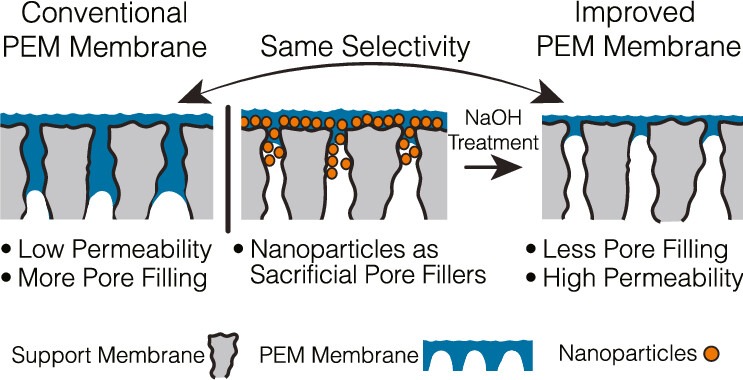
Polyelectrolyte multilayer (PEM) membranes have shown great promise in a wide range of membrane-based separations. However, a continuous challenge is the permeability-selectivity trade-off. One method of avoiding this trade-off is by reducing the thickness of the selective layer. However, PEM membranes have a limit to this reduction, as they first have to fill the pores […]
Alessia (WP3) – Uncovering redox-specific biotransformation of organic micropollutants
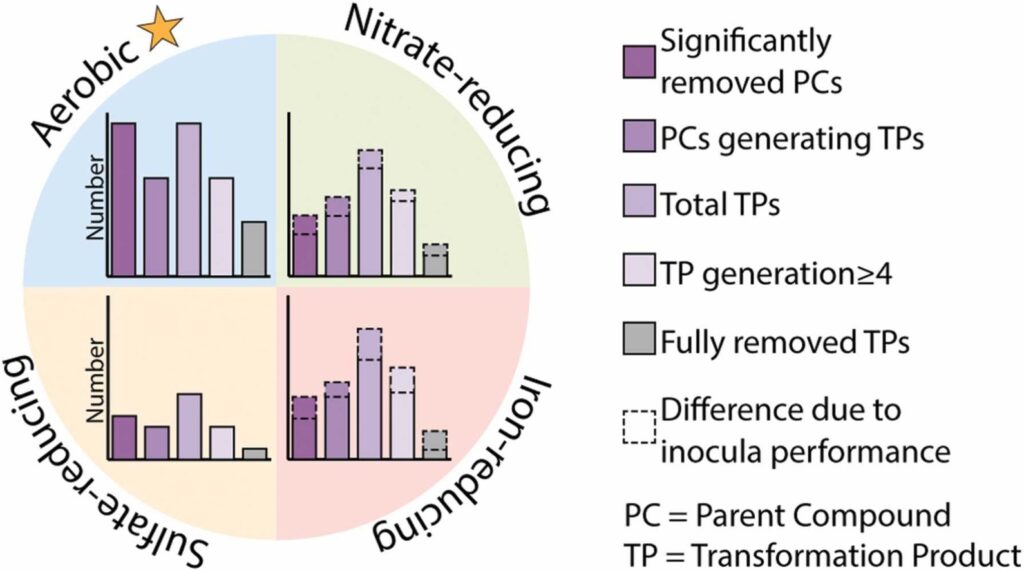
Redox conditions are key environmental factors influencing organic micropollutants (OMPs) biodegradation in both nature-based and engineered treatment systems. Yet, OMP biodegradation and transformation product (TP) formation under different redox conditions are not fully understood, particularly using natural inocula. Here, we tested two natural inocula, from soil and ditch sediment, for biodegradation of 19 OMPs under […]
Valdrich (WP6) – Predicting groundwater storage from seasonal managed aquifer recharge: insights from machine learning and explainable AI techniques
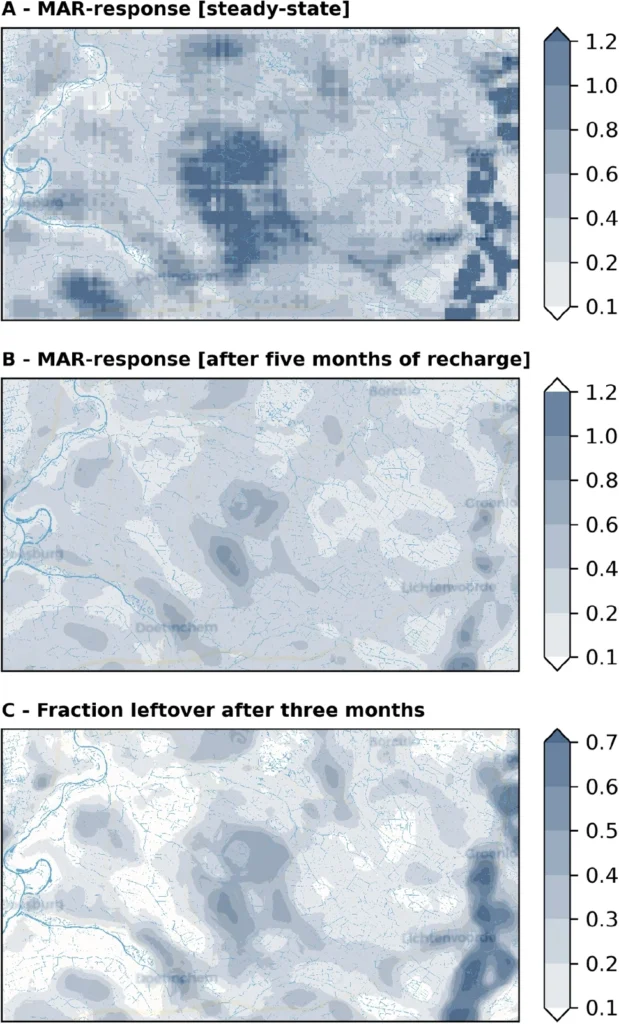
Managed Aquifer Recharge (MAR) is widely used to enhance groundwater storage and support sustainable water use. To support site selection and planning, Machine Learning (ML) models are increasingly used as computationally efficient surrogates for traditional numerical models. While ML has shown promise for steady-state simulations, capturing transient responses remains a challenge, yet these are essential […]
Tjerk (WP4) – Predicting and improving the mechanical strength of outer-skinned hollow fiber membranes
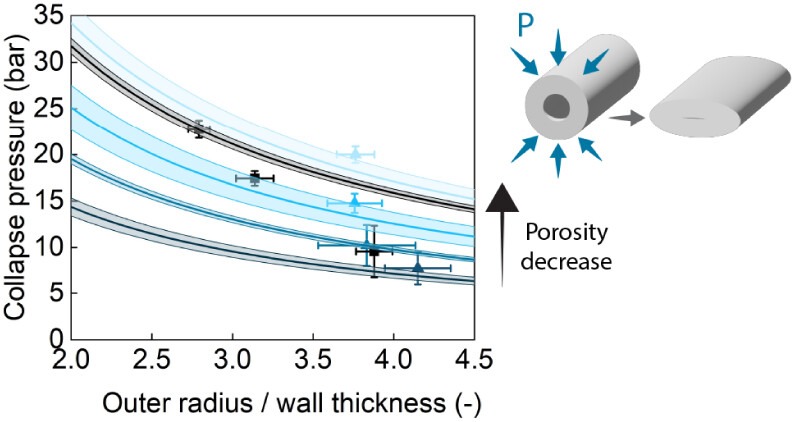
Pressure-driven hollow fiber (HF) membranes are often operated with the feed on the outside of the HF. In such a configuration, it is important to know the limits of the external pressure that can be applied to the membrane. Therefore, we investigated whether a model for predicting the collapse pressure of isotropic thin-walled cylinders was […]
Alessio (WP6) – Neural network-informed optimal water flow problem: Modeling, algorithm, and benchmarking
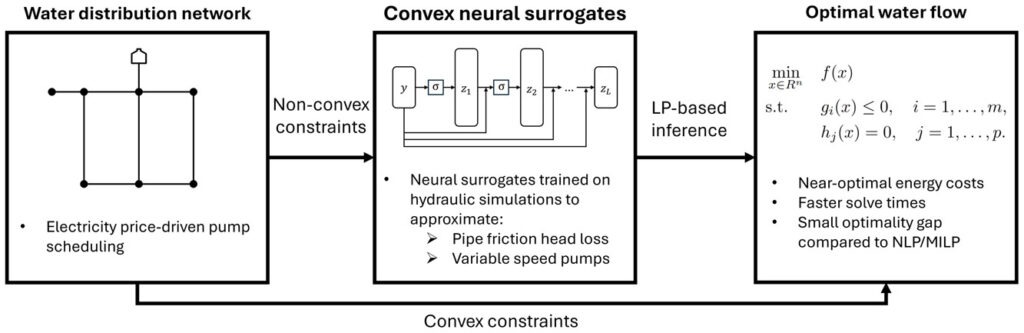
Water distribution networks comprise interconnected components such as pipes, tanks, and pumps, whose hydraulic behavior is inherently nonlinear and nonconvex. Modeling head loss in pipes and pump performance curves is a major challenge for optimization-based planning and operations. These challenges arise, for instance, when solving the Optimal Water Flow (OWF) problem, which aims to determine […]
Alaaeldin (WP4) – On-site affordable acid and base production from seawater using bipolar membrane electrodialysis: ion transport and polyelectrolyte multilayer coating
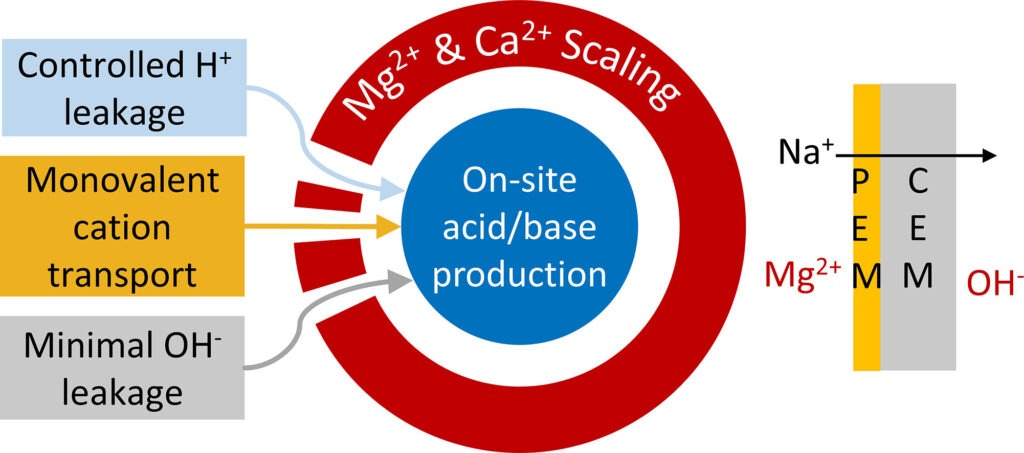
The ability to produce acids and bases on-site at low energy and cost is of great interest to seawater reverse osmosis desalination plants. Acid is needed to lower the seawater pH to mitigate scaling in reverse osmosis (RO) modules. Base is needed to shift the boron equilibrium in the permeate of the first RO stage […]
Kirsty (WP5) – Conceptualizing transdisciplinarity: How do visuals mean?
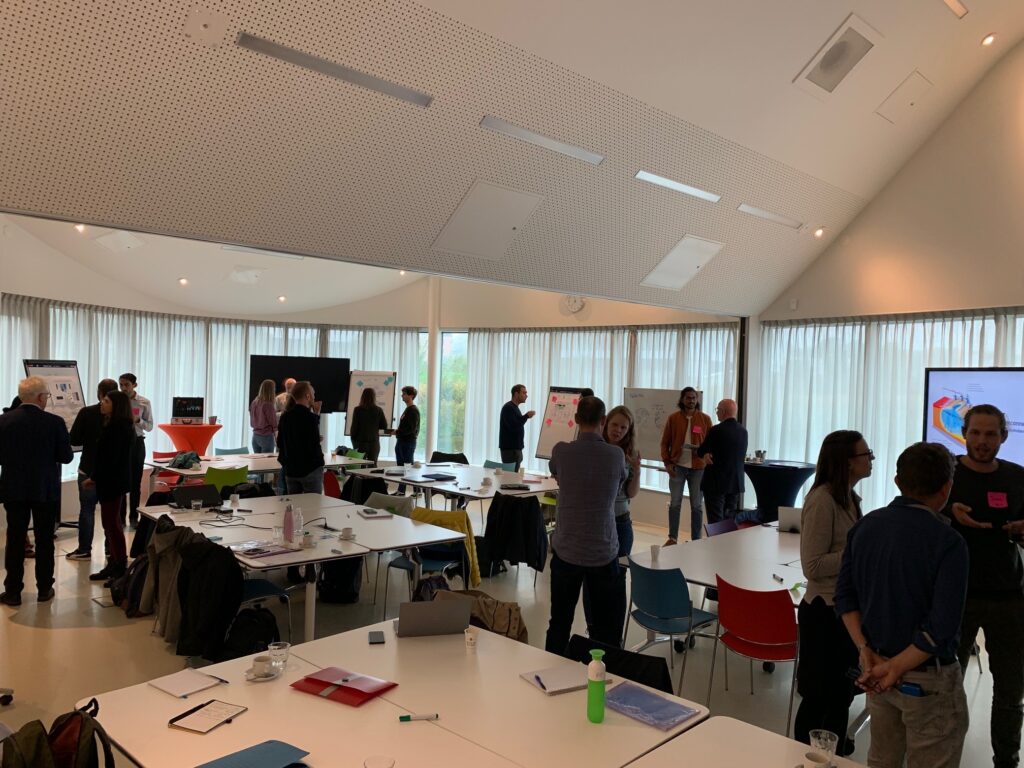
Transdisciplinary research is commonly understood as a research collaboration between different academic disciplines and actors from different sectors of society to co-produce knowledge needed in addressing real-world problems. In this paper, we understand transdisciplinary research as an epistemological object and study how researchers conceptualize it through visualization. To do this, we analyzed a set of related visuals […]
Alaaeldin (WP4) – Water and co-ion transport across ion-exchange membranes coated with PAH/PSS polyelectrolyte multilayer in electrodialysis and diffusion dialysis
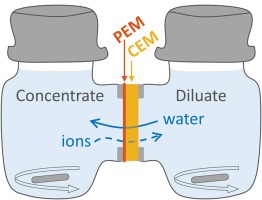
Ion-exchange membranes with high monovalent/divalent selectivity can accelerate the commercialization of electrochemical systems for circular economies. The membrane selectivity can be achieved by coating the membrane with a polyelectrolyte multilayer (PEM). The co-ion and water transport are critical aspects for using the coated cation-exchange membranes (CEMs) in bipolar membrane electrodialysis stacks (BMED) that utilize brine streams […]
Kirsty (WP6) – Balancing reality, meaning, and play for water governance transformation: A triadic game design perspective on the AquaConnect serious game
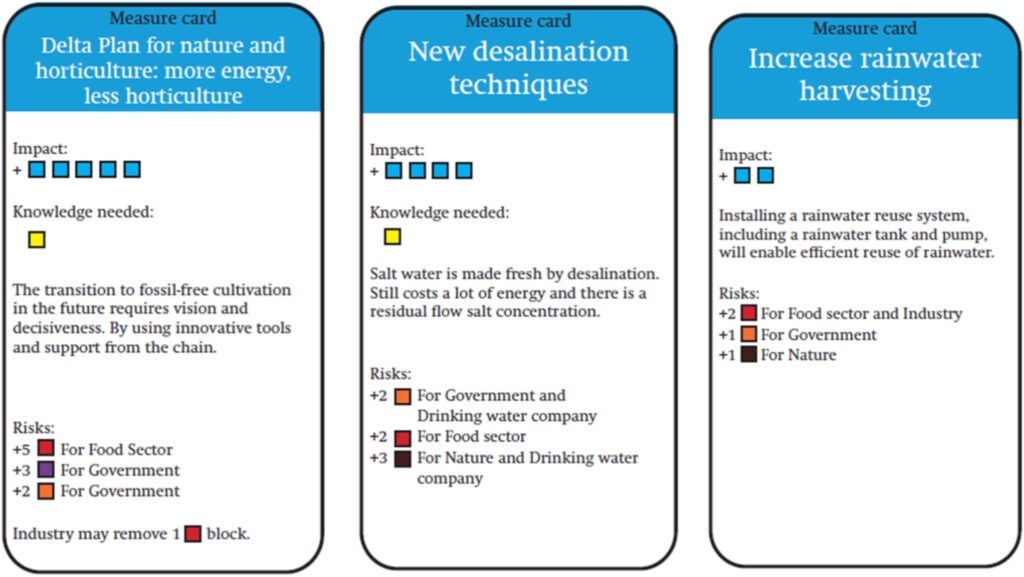
Serious games are increasingly used to engage stakeholders with complex social-ecological challenges and to support transformative learning. Their effectiveness depends on achieving a careful balance between play, reality, and meaning, ensuring that games are not only engaging and enjoyable (play), but also credible in their representation of real-world systems (reality), and capable of producing reflective, […]
Alessia (WP3) – Higher microbial diversity enhances the extent and rate of organic micropollutant biodegradation under aerobic and nitrate-reducing conditions
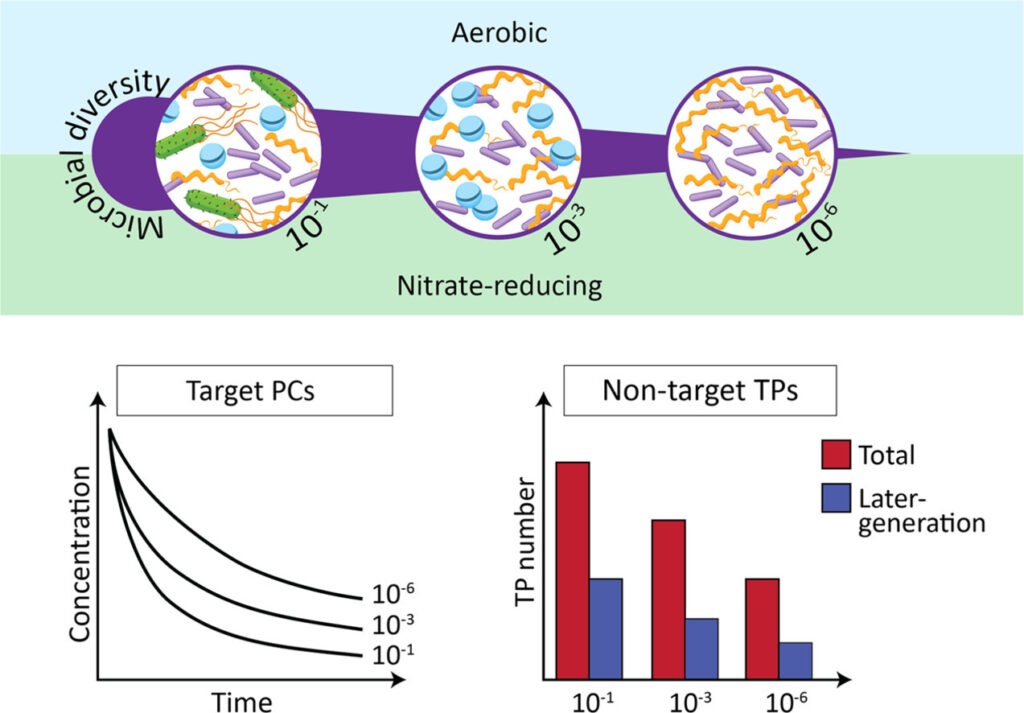
Organic micropollutant (OMP) biodegradation rates and pathways in environmental and engineered systems depend on several factors, including redox conditions and microbial diversity. We investigated the impact of these two variables on the degradation of 20 OMPs. Soil microbial communities with three diversity levels were generated via solid-phase dilution-to-extinction. After a regrowth period, communities were incubated […]