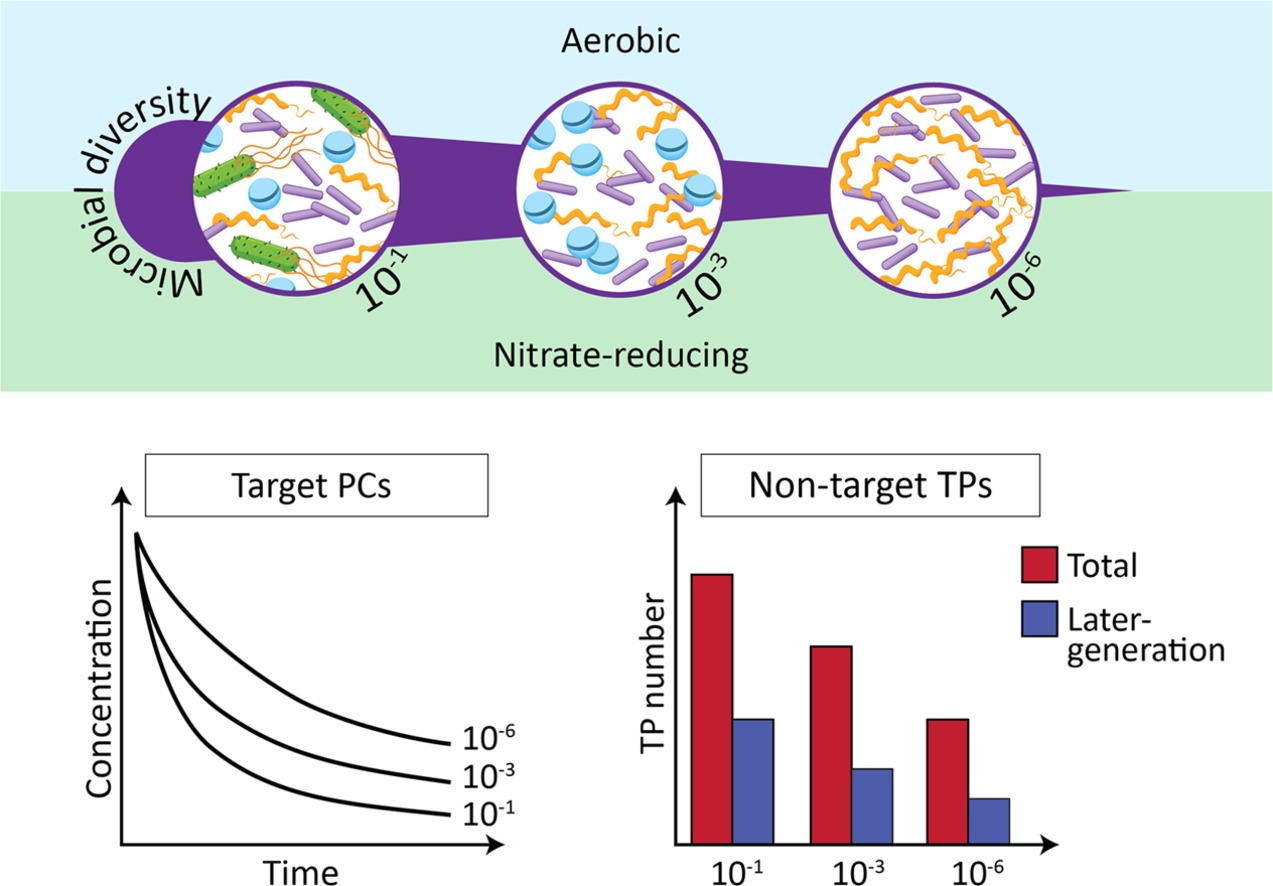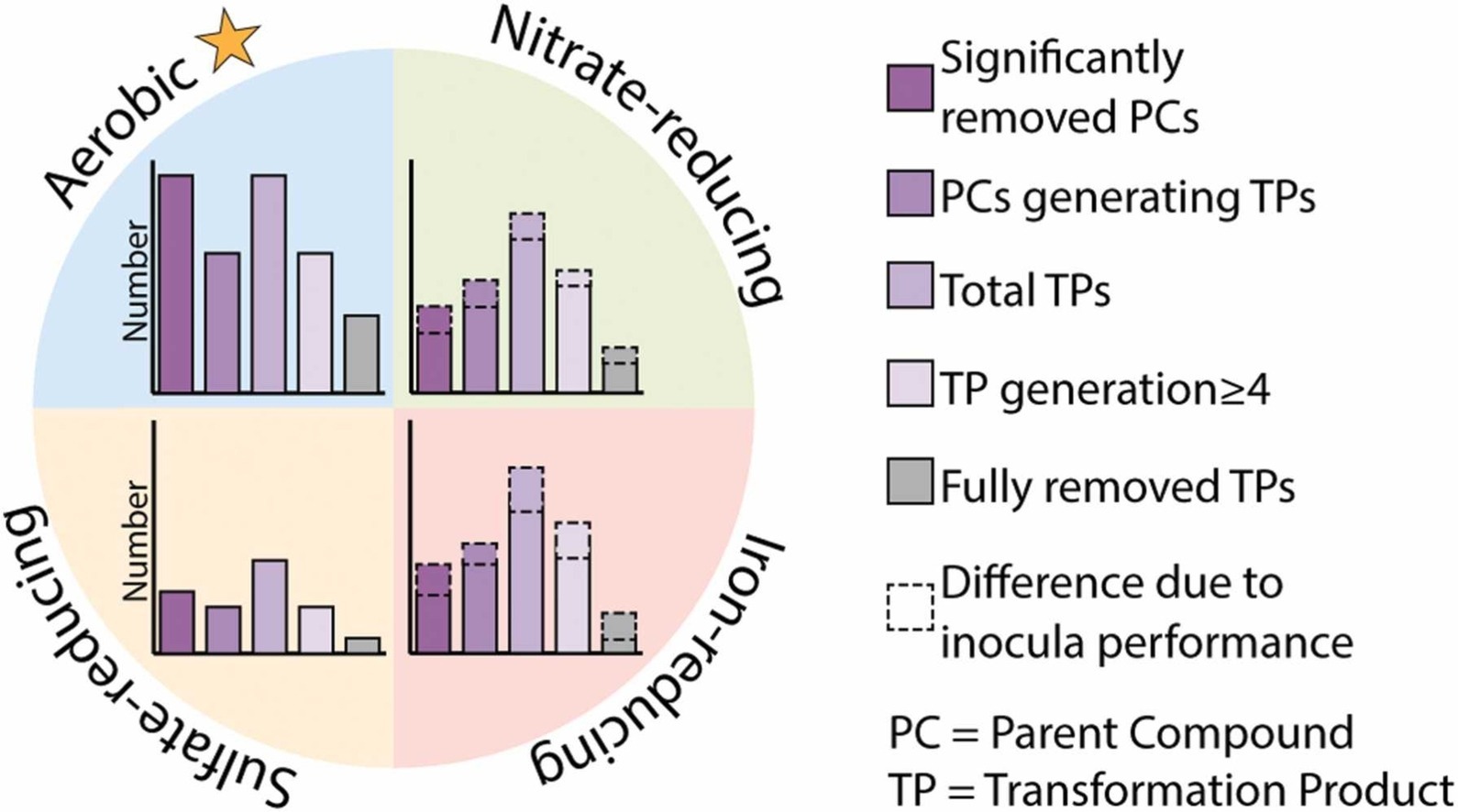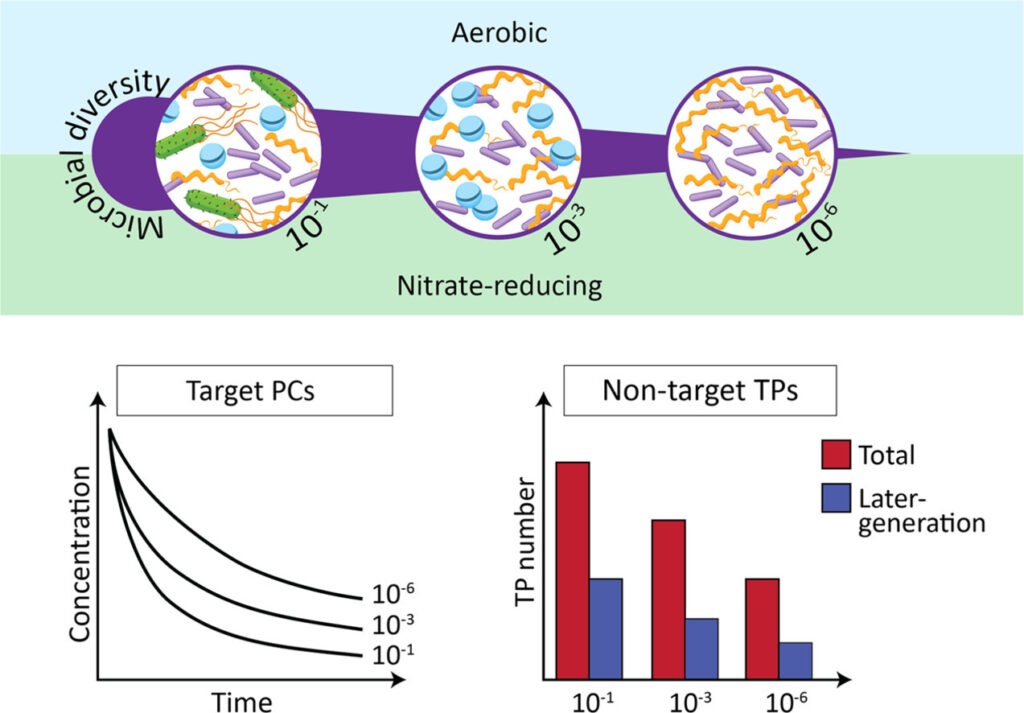
Organic micropollutant (OMP) biodegradation rates and pathways in environmental and engineered systems depend on several factors, including redox conditions and microbial diversity. We investigated the impact of these two variables on the degradation of 20 OMPs. Soil microbial communities with three diversity levels were generated via solid-phase dilution-to-extinction. After a regrowth period, communities were incubated with OMPs under aerobic and nitrate-reducing conditions. High and medium microbial diversity led to more OMPs being degraded, up to 15 and 5 under aerobic and nitrate-reducing conditions, respectively, compared to 11 and 4 under low diversity. Higher diversity also led to increased biodegradation rates and formation of a broader range of transformation products (TPs), including later-generation TPs. For TPs detected across multiple diversity levels and redox conditions, lag phases before initial detection were shorter in higher diversity and aerobic conditions. Biodegradation under nitrate-reducing conditions was slower and less efficient, yet the positive correlation with microbial diversity remained (mean raerobic = 0.28 and rnitrate-reducing = 0.26, p < 0.01). Redox-specific TP production and taxonomic differences suggested distinct biodegradation pathways under different redox conditions. While some TPs persisted until the end of the incubation, none were predicted to be dead-end TPs according to BioTransformer. However, predictions with OPERA’s CERAPP and CoMPARA modules revealed two TPs with potential endocrine-disrupting effects. Our study highlights that microbial diversity and redox conditions strongly influence OMP degradation rates and pathways, and thus TP formation. Moreover, our results suggest a threshold in microbial diversity below which functional capacity is affected. Diversity should therefore be considered in standardized tests evaluating OMP persistence in the environment. Read more here: https://doi.org/10.1016/j.watres.2025.124921